

DOT oral fluid drug testing is not available yet. As of October 13, 2026, DOT’s published list still shows no certified oral fluid laboratories. Employers need at least two laboratories certified by the Department of Health and Human Services, or HHS, before they can use this option. Continue urine testing for DOT drug tests while preparing your policy and collection arrangements. DOT laboratory and device list, September 30 HHS notice.
The FDA’s October 6 decision may help laboratories move forward. It does not give employers a start date. Laboratory certification and getting your collection sites ready are separate steps. FDA final order.
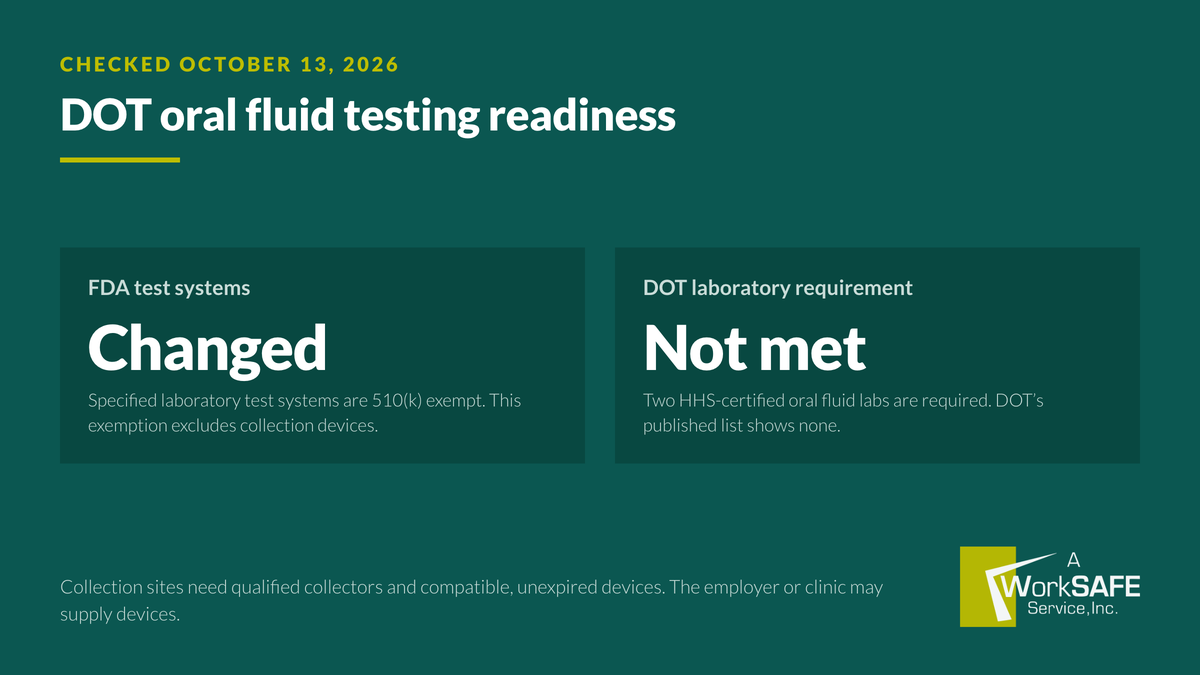
FDA test systems: changed. Specified laboratory test systems are 510(k) exempt; this exemption excludes collection devices. DOT laboratory requirement: not met. Two HHS-certified oral fluid labs are required; DOT’s published list shows none. Collection sites also need qualified collectors and compatible, unexpired devices. The employer or clinic may supply the devices.
DOT authorized oral fluid in 2023. Availability is still pending.
DOT's final rule added oral fluid as an authorized specimen type and took effect June 1, 2023. That effective date did not mean the testing infrastructure was ready. The rule required at least two HHS-certified oral fluid laboratories before implementation. DOT's 2023 final rule. One laboratory tests the primary specimen. A different certified laboratory must be available to test the split specimen if an employee requests that testing after a qualifying result. This is why certification of one laboratory alone would not make DOT oral fluid testing available. DOT's explanation of the laboratory requirements.
The October 6 FDA decision
The FDA order expands 510(k) exemptions for certain class II clinical toxicology test systems, including eligible systems intended for federal drug testing. The exemptions have limits, and other applicable requirements still apply. Oral fluid collection devices were excluded from this order. FDA final order, responses 3, 5 and 8.
The laboratory's test system and the device used to collect an employee's specimen have different requirements. A change affecting the test system does not establish that a collection device is approved for a particular laboratory. DOT's list identifies the devices approved for use by each certified oral fluid laboratory. DOT laboratory and device list.
FDA specifically states that it does not decide whether oral fluid testing may be used in federal drug testing programs. FDA final order, response 6.
Is there a confirmed start date?
There is no confirmed DOT oral fluid start date in the official sources checked for this article.
Patrice Kelly, who authored DOT’s 2023 oral fluid rule, expects the necessary laboratory certifications later in 2026 or early in 2027. That remains a planning expectation, not a confirmed start date. Employers still need to confirm that the laboratory and collection requirements are met before they begin oral fluid testing.
Under 49 CFR 40.67(g)(5), availability requires:
- At least two HHS-certified oral fluid laboratories.
- A qualified oral fluid collector.
- A conforming collection device at the collection site.
Check the DOT laboratory and device list and confirm the collection arrangements with your testing provider before changing instructions to begin oral fluid testing.
Will every employer have to replace urine testing?
Oral fluid is generally an additional option. It does not replace urine testing across the DOT program. Employers ordinarily choose the specimen type for a testing event. They cannot collect both urine and oral fluid simultaneously at the beginning of that event, and an instant oral fluid test cannot satisfy a DOT drug testing requirement. DOT specimens must be screened and confirmed at HHS-certified laboratories. 49 CFR 40.210.
There is a specific exception employers should plan for. Once oral fluid testing is available, 49 CFR 40.67(g) requires it in a directly observed collection when a same-sex observer cannot be found. The rule provides an 18-month grace period after HHS notification of the second certified laboratory for employers to get set up. If an employer has decided to use oral fluid and is ready during that period, it must do so in that situation. DOT will announce when the period begins and ends. The October 6 FDA order does not start that period.
Getting collection sites ready
Two certified laboratories would meet the federal laboratory requirement. That does not mean every clinic can collect oral fluid immediately. Each collection needs a qualified collector and a device approved for the laboratory receiving the specimen. Urine collector qualification alone does not establish oral fluid qualification. 49 CFR 40.67(g)(5), oral fluid collector requirements.
Talk with the clinics your employees use now. An employer may supply the devices, or a clinic may supply them as part of the collection service. Agree on who will order and deliver them. Confirm that the devices match the laboratory’s approval, remain within their expiration dates and will be at the site when the employee arrives. DOT laboratory and device list, 49 CFR 40.72.
Ask for collection charges and laboratory charges separately. Clarify whether the collection charge includes the device or assumes you will provide it. Include employee travel and waiting time when comparing options. Obtain current quotes before budgeting rather than relying on a projected laboratory rate or future supply-based fee.
Preparing while urine testing continues
You can make decisions before oral fluid testing becomes available. Start with your written DOT policy. If it specifies urine testing and you intend to add oral fluid, identify the language that needs to change. Discuss which test reasons would use each specimen type with your Designated Employer Representative, or DER, and testing provider.
Confirm how your instructions will reach the collector. Written standing orders can communicate your specimen choices and the response to collection problems. They are a practical way to provide instructions; DOT does not require every employer to use a universal standing-order form. The employer or its service agent must ensure the collector has the required information, including specimen type. 49 CFR 40.14, 49 CFR 40.210.
Identify an alternate collection site and allow urine fallback only where DOT rules permit it. For the observed-collection situation described above, follow the site referral and grace-period provisions in 49 CFR 40.67(g). Explain the intended changes to employees before implementation. Keep DOT and non-DOT testing separate; an oral fluid option in a non-DOT program does not establish DOT availability. 49 CFR 40.13.
The next decision is whether oral fluid fits your program and how you would use it when available. Employers who want help reviewing policy language or collection instructions can contact A WorkSAFE Service about drug and alcohol policy development.
Watch the oral fluid webinar
This September 23, 2026 recording predates the October 6 FDA order. The availability and regulatory updates in this article were checked October 13, 2026.
